Table of Contents
Can Congress subpoena a journalist for reporting a Delta Force commander’s name?
Shutterstock.com
On Jan. 7, the House Oversight Committee approved a subpoena for Seth Harp, an investigative journalist and contributing editor at Rolling Stone, for posting information about a Delta Force commander. Congress has broad authority to issue subpoenas. But it must show far more restraint when aiming them at journalists without any evidence of wrongdoing.
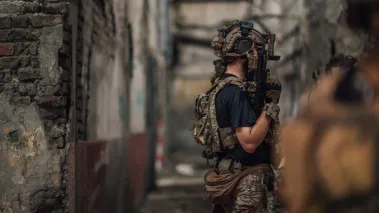
In early January, Harp reposted a screenshot identifying a commander involved in the U.S. capture of Nicolás Maduro, Venezuela’s former dictator. X reportedly locked Harp’s account until he deleted the post. The House Oversight Committee then voted to approve a subpoena “for leaking classified information.” Republican Rep. Anna Paulina Luna of Florida’s 13th congressional district, who introduced the motion to subpoena Harp, said, “Putting a service member and their family in danger is dishonorable and feckless. Leaking classified information demands explanation and a criminal investigation.”
But publishing the news, even when the news contains classified information, is exactly the role of a journalist. And Rep. Luna did not cite any evidence that Harp broke the law to obtain the information.
Can Congress subpoena Harp over his reporting?
Congress has a broad subpoena power, subject to some constitutional limits.
Congress does have broad investigative authority tied to its legislative power, and subpoenas are a standard tool of that authority. It cannot investigate without the ability to compel people to share information.
But that authority still has limits. In Watkins v. United States (1957), a McCarthy-era congressional subpoena case, the Supreme Court held that while it is “unquestionably the duty” of citizens to cooperate with such subpoenas, the power to issue subpoenas at all “assumes that the constitutional rights of witnesses will be respected by the Congress as they are in a court of justice. The Bill of Rights is applicable to investigations as to all forms of governmental action.” The First Amendment prohibits government retaliation for engaging in protected speech. So under Watkins’ rationale, Congress should not subpoena a journalist merely because it dislikes their reporting.
If Congress abuses its subpoena power, will courts stop it?
In practice, the Speech or Debate Clause weakens Watkins’ constitutional limit on congressional subpoenas.
Even after Watkins, abusive congressional subpoenas are difficult to preemptively fight in court. One reason is the Speech or Debate Clause, which gives members of Congress immunity for legislative acts or statements, including subpoenas.
In Eastland v. U.S. Servicemen’s Fund (1975), the Senate investigated the defendant organization (including a subpoena for bank records) after it distributed anti-Vietnam war publications to the military. When the Servicemen’s Fund challenged the subpoena all the way to the Supreme Court, the Court held that the subpoena fell within Congress’s “legitimate legislative sphere” of investigating the “effect of subversive activities.” Because the committee acted within its investigatory powers, the Court concluded, the Speech or Debate Clause immunized the committee and its staff from suit. The subpoena remained on the books.
Eastland thus stands for the proposition that courts may not “look behind” a subpoena for constitutionally improper motives. It would be unconstitutional for Congress to investigate a nonprofit’s bank accounts, or a reporter’s sources, based on First Amendment-protected expression. But so long as Congress can prove it acted within the bounds of its power, any remedy for the constitutional violation must be found outside the courts.
Even if Congress can use its subpoena power to end-run around the First Amendment, should it?
Standardless subpoenas against reporters risk chilling journalism.
Even when Congress has facially legitimate (if arguably pretextual) grounds for its investigation, forced investigative questioning is a direct threat to the conditions that make journalistic inquiry possible. Freedom of the press — and of speech — requires the ability to pursue knowledge and ideas without fear of retribution. Otherwise, our knowledge grows stale, and our ability to assess the truth trends toward the state’s mandated line. As the Supreme Court noted in Sweezy v. New Hampshire (1957), “scholarship cannot flourish in an atmosphere of suspicion and distrust.” Replace “scholarship” with “protesting” or “reporting,” and the principle remains the same.
Floyd Abrams, who has spent his career litigating press cases, puts it plainly — such legal battles “cost an enormous amount of money, have enormous disruptive effects” and represent “an institutional threat to the behavior of a newspaper.” Subpoenas signal to sources that talking to the press could put them under a governmental spotlight. They force reporters and editors to ask: This story is accurate, but can we afford the cost of printing it?
FIRE’s recent work shows that when Congress goes overboard with investigations, it can scare people into silence — even when their speech is perfectly legal. Tyler Coward, lead government counsel at FIRE, condemned congressional investigations into student groups and nonprofits associated with pro-Palestine protests as “fishing expedition[s]” based on groups’ viewpoint.
Likewise, John Coleman, legislative counsel at FIRE, criticized the House’s investigation of Stanford researchers studying “misinformation.” Targeting protected academic inquiry might serve some legitimate congressional objective, Coleman argued, but such investigations deter future inquiry. For reporters, the same lesson is obvious: even if a subpoena is ultimately narrowed or withdrawn, if you want to avoid the risk, avoid the subject.
The issuance of speech-chilling subpoenas knows no partisan bounds, either. Republicans led the investigations into pro-Palestine groups and Stanford researchers. But in 2021, the House Select Committee on January 6th — chaired by Democratic Rep. Bennie Thompson — subpoenaed a photojournalist’s phone records from Verizon. At the time, the Reporters Committee for Freedom of the Press called on Thompson to withdraw the subpoena, calling it a “direct threat to newsgathering.” In Seth Harp’s case, the House Oversight Committee’s top Democrat, Rep. Robert Garcia, supported Rep. Luna’s motion to subpoena, and it was approved unanimously.
If courts are unlikely to stop Congress, who will protect journalists?
Even if constitutional, Congress should refrain from issuing standardless subpoenas against journalists.
Despite the fact that the Speech or Debate Clause largely immunizes Congress when it issues subpoenas, Congress has an independent obligation to follow the Constitution. Recall that Eastland held that courts may not “look behind” a subpoena to test whether the real aim was retaliation or harassment. Facially legitimate subpoenas will stand, even if they’re arguably illegal. That means Congress itself is the main check on subpoenas meant to retaliate against or harass reporters. And Congress must better police its subpoena process — otherwise it imperils not only our free press, but also free speech and our collective pursuit of truth and knowledge.
Congress should keep Watkins in mind when crafting subpoenas. At a base level, that means Congress should not issue subpoenas to journalists for merely reporting the news. Beyond that, Congress should ensure that there are no other means to obtain the requested information. It should tailor requests to avoid sweeping in things like sources, editorial deliberations, or other discussions essential to the newsgathering process. These suggestions are modest but vital institutional firewalls against congressional abuse of its oversight power.
The public cannot be informed — cannot check officials, evaluate policy, or hold politicians accountable — without strong protections for the press freedom to share information and to criticize without retaliation. Alexander Hamilton warned that constitutional safeguards are often not enough. The freedom of the press, he wrote in Federalist No. 84, rested not in “fine declarations” but rather in the “general spirit of the people and of the government.”
Congress must take it upon itself, in Harp’s case and others, to embody that spirit of a free press and refrain from investigating journalists for merely doing their job.
Recent Articles
Get the latest free speech news and analysis from FIRE.
FIRE POLL: Americans overwhelmingly want free speech protected in AI regulation

You talkin’ to me? New York City official wants to turn yellow cabs into speech police.

Two Universities. Two Posters. One First Amendment Problem.