Table of Contents
Morgan State says cut the cameras, stop the presses
Shutterstock.com
Sourcing is one of the most foundational skills any journalist learns. But at Morgan State University, the student press is effectively barred from speaking to faculty or staff without prior approval. In other words, for student journalists writing about their own university, basic sourcing is banned unless exceptions are made at the whim of an administrator.
MSU has historically encouraged media to coordinate requests for such interviews through its Office of Public Relations and Strategic Communications. But on Nov. 13, OPRSC Director Larry Jones escalated the university’s suggestion into a demand in an email to the school community, specifically targeting student media with new requirements.
Now reporters from The MSU Spokesman, BEAR TV, and WEAA 88.9 FM must clear all interviews involving the university or its operations with the OPRSC. Even more astonishingly, the same rule applies even if the interview request doesn’t directly relate to university matters, but nonetheless occurs on campus.
Journalism doesn’t come with a permission slip.
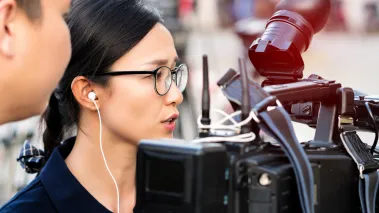
The new directive didn’t stop there. Any filming not sponsored by the university that takes place on campus is now subject to a “comprehensive review and approval process” by the university’s communications office.
FIRE’s Student Press Freedom Initiative teamed up with the Society of Professional Journalists to remind MSU of the student press’s rights to speak to sources and report on campus-related news. It should not have to be said, but journalism doesn’t come with a permission slip.
Questions unasked
The plain language of MSU’s policy prevents student journalists from merely asking school-affiliated sources to answer questions, even though such requests are themselves protected expression. The policy suppresses this speech before it can even occur — a textbook example of prior restraint, which the Supreme Court has called “the most serious and least tolerable infringement” on free speech.
A university afraid of questions is a university afraid of answers.
Questions unasked are questions unanswered. Faculty and student employees, who would speak in their private capacity on topics of public concern, have the right to share their views. If public university employees don’t present themselves as representing the university, and are speaking about newsworthy issues, their statements are generally protected speech. MSU can tell employees not to speak on behalf of the university, but it can’t issue a blanket ban on employees’ ability to speak with the press. Now, however, faculty and staff cannot offer their own opinions in response to a student media request.
These restrictions are rarely valid, which is why many of the colleges and universities that SPFI has contacted have rolled back such policies. But MSU is not one of them, at least not yet. And this is really not a good look because a university afraid of questions is a university afraid of answers.
B-roll blackout
MSU pulls campus filming into its restrictive policy, too. Both professional and student newsrooms across the country gather video footage to support their storytelling, a practice that is increasingly common due to the widespread availability of smartphones and social media. B-roll, or supplementary video footage used to add context to a story — such as an establishing shot of the university campus or a scene of students studying in the library — cannot be filmed at all if the shots include any of MSU’s outdoor areas, at least not without OPRSC approval. The same goes for filmed interviews.
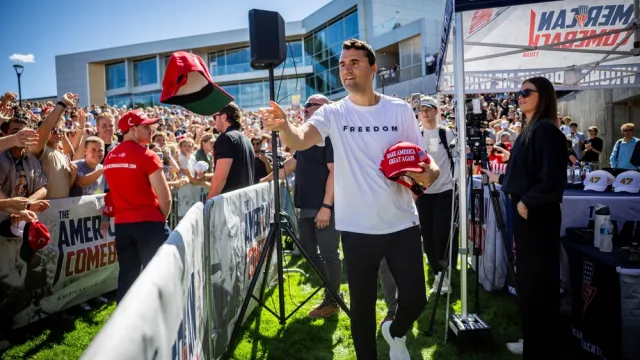
Morgan State University: Public Calls on Morgan State University to Punish Faculty for Charlie Kirk Comments
The public has called on Morgan State University to discipline faculty for exercising their free speech rights when commenting on public issues.
But breaking news doesn’t wait to happen until an administrator has reviewed and approved a film request. Open, outdoor areas of a university are generally public fora, where student expression is at its most protected. Instead of enhancing students’ newsgathering or teaching them how to be better reporters, the school is instead delaying, if not outright suppressing, multimedia journalistic efforts along with faculty interviews.
By targeting the student press specifically, MSU is sending a clear message that it doesn’t want its student journalists addressing questions about important campus issues to those most personally affected by them. That message runs counter to the very fundamentals of journalism. The result, possibly by design, will be that many stories will likely die on the vine for lack of sunlight. And even for those that survive, they’d better not include video footage unless an administrator signs off first. That’s not media policy. It’s message control.
Recent Articles
Get the latest free speech news and analysis from FIRE.
FIRE sues Bondi, Noem for censoring Facebook group and app reporting ICE activity
Deep dive into New York’s proposals to ban demonstrations near houses of worship
Iran replaced my mother’s voice with silence