Table of Contents
Penn State: Pulling the Wool over Your Eyes
Today, in The Chronicle of Higher Education, Penn State attempted to play damage control after significantly altering two patently unconstitutional policies. In what is probably the lamest justification for doing so, the Penn State tried to claim that, “These changes do appear to match up well with the interests of the plaintiff…but the revision would have been made in this manner regardless of any legal action.”
So the fact that Penn State was sued in federal court had absolutely nothing to do with an abrupt alteration in policies? Next time, Penn State might want to make sure that the revision history of AD29 and AD42 matches their story. The truth is that these polices have been around, in substantially the same form, since the early 1990s. This makes it extraordinarily hard to believe that the changes were merely routine revisions; if so, why did it take more then a decade to change the policies? It isn’t very hard to see through Penn State’s apparent ruse.
Would it really be so difficult for Penn State to just say, “We recognize that we have a legal and moral right to ensure a free exchange of ideas on campus, so we altered the policies accordingly”?
Recent Articles
Get the latest free speech news and analysis from FIRE.

He refused to censor his syllabus — so Texas Tech cancelled his class
In another blow to academic freedom in the Lone Star state, Texas Tech canceled a psychology class after the professor refused to scrub race and gender from his syllabus.

Fandom’s lighthouse in a sea of censorship
In the storm of internet censorship and cancel crusades, the fanfic database Archive Of Our Own (AO3) has become a lighthouse of artistic expression.
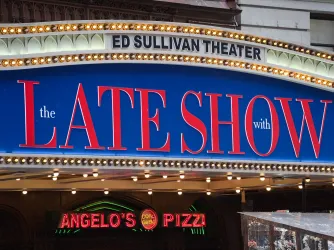
FIRE statement on Stephen Colbert’s James Talarico interview and continued FCC pressure
Brendan Carr used to say that the FCC cannot act as the nation’s speech police, but now that he is chairman he has worn the badge proudly.
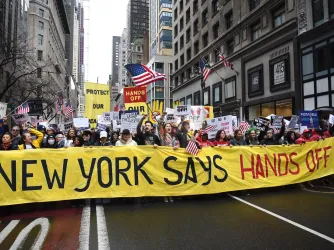
Deep dive into New York’s proposals to ban demonstrations near houses of worship
Core among the rights protected by the First Amendment is the right to demonstrate.