Table of Contents
Federal mandates and campus rights: FIRE’s response to Title VI pressure at Columbia
Research & Learn
FIRE offers recommendations for better, constitutional reforms which aim to safeguard free expression and academic freedom while ensuring that Title VI grievances are addressed through fair, consistent, and transparent institutional processes.
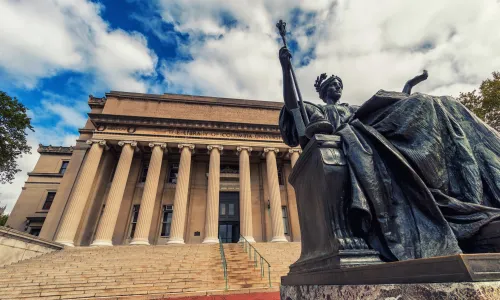
In March 2025, following the launch of Title VI investigations into allegations of an anti-Semitic environment at Columbia University, the U.S. Departments of Health and Human Services, Education, and the General Services Administration abruptly canceled $400 million in federal contracts with the university. One week later, those agencies issued a follow-up letter sidestepping key procedural safeguards and outlining a set of sweeping mandates — which FIRE called a “blueprint to supercharge campus censorship.”
On March 21, Columbia issued a four-page memo in which it explained what “steps have been underway” to address the government’s demands, dismaying many faculty members and alarming FIRE and other outside observers, who viewed the agreement as a capitulation that threatened universities’ independence from political pressure.
For the past several months, FIRE has sounded the alarm about the federal government’s failure to follow regulatory procedures established by federal law. On July 23, 2025, Columbia and the federal government committed to a resolution agreement in which Columbia denies liability for violating federal anti-discrimination laws but will pay a $200 million settlement. Per the agreement, the government has dropped its claims against Columbia, and Columbia has agreed to a list of reforms. The government’s purported authority to demand some of these reforms raises constitutional concerns, and the reforms themselves may chill speech at Columbia.
The majority of these reforms track with the commitments Columbia made in its March 21 response to the federal government’s demands. Unique to the resolution agreement, however, is a requirement that Columbia establish processes “to provide that all students, international and domestic, are committed to the longstanding traditions of American universities, including civil discourse, free inquiry, open debate, and the fundamental values of equality and respect.” These are laudable values. But the provision requiring that students commit to “equality and respect” is chilling given its vagueness and malleability, similar to the civility oaths, DEI statements, and other instances of viewpoint-related compelled speech FIRE has long opposed.
Campus rights cannot be secured via unconstitutional means. There is a better way forward. To that end, FIRE offers recommendations for better, constitutional reforms which aim to safeguard free expression and academic freedom while ensuring that Title VI grievances are addressed through fair, consistent, and transparent institutional processes.
Enforcement of Existing Disciplinary Policies
Federal Demand Letter:
“The University must complete disciplinary proceedings for Hamilton Hall and encampments. Meaningful discipline means expulsion or multi-year suspension.”
Columbia Response:
“Application of consistent, rigorous, and effective disciplinary actions for violations of University Rules. Students who violated our rules during Columbia’s first encampment or at Hamilton Hall have been suspended, expelled, or had their degrees temporarily revoked. Disciplinary proceedings against other encampment participants are ongoing. Columbia is committed to rigorous and impartial enforcement of its rules and antidiscrimination policies to ensure a safe campus environment and continuation of all academic functions.”
Settlement Agreement:
“Columbia will impartially implement and apply University rules and policies, including prompt and consistent enforcement of disciplinary rules and policies without regard to identity or ideology. Columbia will evenly implement its institution-wide policies on harassment and discrimination under Title VI. Columbia shall ensure that its trainings for employees covers Columbia’s relevant obligations under this Agreement.”
FIRE’s Position:
Fundamental fairness requires that college disciplinary procedures be consistent and transparent. While Columbia should certainly impose proportional sanctions upon findings of responsibility for misconduct, the result of disciplinary proceedings cannot be preordained, and must be based upon the evidence presented in each individual case.
- Further Reading: Columbia Memo: Enforcement of Existing Disciplinary Policies
University Judicial Board
Federal Demand Letter:
“Abolish the University Judicial Board (UJB) and centralize all disciplinary processes under the Office of the President. And empower the Office of the President to suspend or expel students with an appeal process through the Office of the President.”
Columbia Response:
“The University understands the critical importance of the effectiveness and impartiality of our disciplinary processes. To achieve that goal, the UJB will be situated within and overseen by the Office of the Provost, who reports to the President of Columbia. Given the risk faced by participants in this process, each UJB five-member panel will be restricted to faculty and administrators only. All panel members will undergo a rigorous vetting and conflict review process to ensure objectivity, impartiality, and commitment to following and enforcing our community’s rules and policies. The Provost will have final approval of all panel members and appellate Deans. Final determination of appeals of disciplinary decisions will remain with the President.”
Settlement Agreement:
“As Columbia understands the critical importance of the effectiveness and impartiality of its disciplinary processes outlined in Columbia’s announcement on March 21, 2025, to ensure an efficient and fair process for student discipline and the right to a safe and nondiscriminatory educational environment, Columbia’s UJB and rules process will be housed in and administered by the Office of the Provost. Each UJB panel will be comprised solely of faculty and administrative staff members. All panel members will undergo a rigorous vetting and conflict review process to ensure objectivity, impartiality, and a commitment to following and enforcing Columbia’s rules and policies. The Provost will have final approval of all panel members and appellate Deans. Final determination of appeals of disciplinary decisions will remain with the University President. The University will not provide the UJB panel members with information about respondents’ immigration status and the UJB will not consider respondents’ immigration status in its deliberation or sanctioning.”
FIRE’s Position:
The federal government should not dictate which university office or official must oversee campus disciplinary processes. Private institutions have discretion to design systems that reflect their values and ensure fairness, so imposing such changes through unilateral federal demand raises serious concerns. FIRE’s Model Code recommends disciplinary boards include representatives from across the university, including students, faculty, and administrators, to promote a range of perspectives and secure impartiality. Federal pressure to reshape these structures without clear justification undermines institutional autonomy and risks politicizing campus discipline.
- Further Reading: Columbia Memo: University Judicial Board
Time, Place, and Manner Regulations
Federal Demand Letter:
“Implement permanent, comprehensive time, place, and manner rules to prevent disruption of teaching, research, and campus life.”
Columbia Response:
“We support free speech. Freedom of expression is what enables the rigorous debate and free inquiry on which our academic mission depends. But demonstrations and other protest activities that occur inside academic buildings and places where academic activities take place present a direct impediment to maintaining our core academic mission. Based upon the experience of peer schools, Columbia is clarifying that such protests in academic buildings, and other places necessary for the conduct of University activities, are generally not acceptable under the Rules of University Conduct because of the likelihood of disrupting academic activities. All demonstration activity is subject to the University’s anti-discrimination and anti-harassment policies.”
Settlement Agreement:
“Demonstrations and other protest activities that occur inside academic buildings and places where academic activities take place present a direct impediment to maintaining Columbia’s core academic mission. Such protests in academic buildings, and other places necessary for the conduct of University activities, are not acceptable under the Rules of University Conduct because of the likelihood of disrupting academic activities.”
FIRE’s Position:
Colleges may have regulations governing the time, place, and manner of expression on open, publicly accessible areas of campus that restrict when, where, and how people conduct expressive activities. To protect campus speech, these policies must be content-neutral, leave open other avenues for expression, and be narrowly tailored toward a significant university interest — such as preventing substantial disruption to campus operations. Columbia’s current policies on this topic leave ample room for improvement.
- Further Reading: Columbia Memo: Time, Place, and Manner Regulations
Mask Bans
Federal Demand Letter:
“Ban masks that are intended to conceal identity or intimidate others, with exceptions for religious and health reasons. Any masked individual must wear their Columbia ID on the outside of their clothing (this is already the policy at Columbia’s Irving Medical Center).”
Columbia Response:
“All individuals who engage in protests or demonstrations, including those who wear face masks or face coverings, must, when asked, present their University identification to the satisfaction of a University Delegate or Public Safety officer. Individuals who fail to comply with these policies will be subject to discipline, being escorted off campus, and detention for trespass where appropriate.
Public safety has determined that face masks or face coverings are not allowed for the purpose of concealing one’s identity in the commission of violations of University policies or state, municipal, or federal laws. We have had important instances in the recent past where individuals unaffiliated with the University have caused significant disruptions on our campus. Face masks or face coverings are always allowed for religious or medical reasons.”
Settlement Agreement:
“All individuals who engage in protests or demonstrations, including those who wear face masks or face coverings must, when asked, present their University identification to the satisfaction of a University delegate or Public Safety Officer. Individuals who fail to comply with these policies will be subject to discipline, being escorted off campus, and detention for trespass where appropriate.” “Face masks or face coverings are not allowed for the purpose of concealing one’s identity in the commission of violations of University policies or state, municipal, or federal laws. Face masks or face coverings are always allowed for religious or medical reasons.”
FIRE’s Position:
Placing a preemptive, blanket requirement on all protesters to identify themselves to college administrators — untethered to engaging in misconduct — risks discouraging students and faculty wishing to express controversial ideas from speaking their minds. Rather than applying a blanket identification requirement that chills protected expression, campus law enforcement should seek the identification of those who violate university policies or the law.
Further Reading: Columbia Memo: Masking Bans
Anti-Semitism Definition
Federal Demand Letter:
“Formalize, adopt, and promulgate a definition of antisemitism. President Trump’s Executive Order 13899 uses the IHRA definition. Anti-‘Zionist’ discrimination against Jews in areas unrelated to Israel or the Middle East must be addressed.”
Columbia Response:
“The new Office of Institutional Equity substantially revised the University’s antidiscrimination and discriminatory harassment policy for students and groups, including the ability to sanction groups, (i.e. defund, suspend, or derecognize). The University’s approach and relevant policies will incorporate the definition of antisemitism recommended by Columbia’s Antisemitism Taskforce in August 2024.”
Settlement Agreement:
Not explicitly mentioned in the resolution agreement.
FIRE’s Position:
Institutions that enshrine the International Holocaust Remembrance Alliance (IHRA) definition of anti-Semitism as a disciplinary or policy standard risk chilling protected speech on matters of public concern, particularly when applied to student activism, classroom discussion, or faculty scholarship on the Israeli-Palestinian conflict. Title VI of the Civil Rights Act already provides a legal basis for institutions to protect Jewish students from discrimination based on ethnicity or national origin, without endorsing a formal definition that risks conflating criticism of Israel with anti-Semitism. Colleges and universities should address genuine discrimination through existing frameworks while preserving free expression by maintaining neutrality on contested political issues and fostering education through voluntary dialogue.
- Further Reading: Columbia Memo: IHRA, Anti-Semitism Definition
Internal Law Enforcement Empowerment
Federal Demand Letter:
“The University must ensure that Columbia security has full law enforcement authority, including arrest and removal of agitators who foster an unsafe or hostile work or study environment, or otherwise interfere with classroom instruction or the functioning of the university.”
Columbia Response:
“The University has hired 36 special officers who will have the ability to remove individuals from campus and/or arrest them when appropriate. Those individuals are near completion of their training and credentialing under New York law to work on our campus. We will continue to assess the necessary size of this force to achieve our goals. The University has a longstanding relationship with the NYPD. While we train and credential our internal security force, we will continue to rely on our relationship with the NYPD to provide additional security assistance when needed.”
Settlement Agreement:
“Columbia’s recent enhancement to campus safety will be maintained for the duration of this Agreement: Columbia will maintain for the duration of the Agreement at least 36 trained and certified special officers, directly and through service providers, with the ability to remove individuals from campus and/or arrest them when appropriate. Columbia’s existing 2015 Memorandum of Understanding with the New York Police Department or similar successor Agreement will remain in full force and effect, ensuring that the NYPD can provide additional security assistance when needed.”
FIRE’s Position:
Universities have an obligation to provide as much security as necessary to protect students and faculty engaging in peaceful expression, regardless of their viewpoint. Added security can help bolster free speech by preventing shout-downs and breaking up disruptions and violence. But the presence of more law enforcement than necessary may also chill expression. Universities should seek to strike the right balance and by pairing the provision of proper security with clear conduct policies and regular efforts to educate students and administrators about free speech rights.
Further Reading: Columbia Memo: Internal Law Enforcement Empowerment
Academic Receivership
Federal Demand Letter:
“Begin the process of placing the Middle East, South Asian, and African Studies department under academic receivership for a minimum of five years. The University must provide a full plan, with date-certain deliverables, by the March 20, 2025, deadline.”
Columbia Response:
“As part of our ongoing efforts, we are appointing a new Senior Vice Provost this week with a focus on promoting excellence in Regional Studies. As part of this portfolio, the Senior Vice Provost, acting with the authority of the Provost Office, will conduct a thorough review of the portfolio of programs in regional areas across the University, starting immediately with the Middle East.”
Settlement Agreement:
“Senior Vice Provost: Consistent with Columbia’s announcement on March 21, 2025, Columbia shall maintain its Senior Vice Provost focused on promoting excellence in regional studies, by conducting a “thorough review of the portfolio of programs in regional areas across the University, starting with the Middle East.”
“In this role, the Senior Vice Provost will:
- Review the educational programs to ensure the educational offerings are comprehensive and balanced;
- Review all aspects of leadership and curriculum;
- Stewards the creation of new programs to address the full range of fields;
- Partner with the Vice Provost for Faculty Affairs and the schools to create a standard review process for the hiring of non-tenured faculty across the University;
- Review the processes for approving curricular changes; and
- Make recommendations to the President and Provost, in accordance with academic procedures, about any necessary changes, academic restructuring, or investments that will ensure academic excellence and complementarity across all programs in the given academic areas.”
“Columbia shall, consistent with its announcement on March 21, 2025, appoint new faculty members with joint positions in both the Institute for Israel and Jewish Studies and the departments or fields of economics, political science, or SIPA. These faculty members will contribute to a robust and intellectually diverse academic environment.”
FIRE’s Position:
High-level decisions about academic work in a department must be made by university academic leadership, not the government. A university should institute academic receivership, in which an individual outside the department is appointed as chair, only as a last resort where neutral leadership is necessary to restore functioning of the department. When the government demands such a takeover to influence curriculum or staffing decisions at a private university, it crosses a constitutional line. The First Amendment protects academic freedom from government interference, including the right of private universities to determine who teaches, what is taught, and how it is taught. Demands that seek to reshape a private university’s academic decision making from the outside cannot be reconciled with that core constitutional protection.
- Further Reading: Columbia Memo: Academic Receivership
Oversight and Support of Student Groups
Federal Demand Letter:
“Recognized student groups and individuals operating as constituent members of, or providing support for, unrecognized groups engaged in violations of University policy must be held accountable through formal investigations, disciplinary proceedings, and expulsion as appropriate.”
Columbia Response:
“Columbia’s Office of Institutional Equity (“OIE”) has promulgated a policy and processes for discipline of all student groups that stems from discriminatory conduct. OIE has the ability to sanction these groups, including to defund, suspend, or derecognize. In addition, in the next few weeks, the Office for University Life will announce a sanction policy for violations of University policy unrelated to claims of discrimination with sanctions for registered student groups. Both the existing OIE policy and the new policy will permit sanctions from defunding, suspension, to derecognition.”
Settlement Agreement:
“Student groups are subject to discipline for discriminatory conduct or other violations of University policy. Columbia’s Office of Institutional Equity will enforce existing policy and processes for discipline of all student groups stemming from discriminatory conduct and retains the ability to sanction student groups for discriminatory conduct including by defunding, suspending, or de-recognizing them. The Office of University Life will enforce existing policy and processes for discipline of student groups unrelated to claims of discriminatory conduct, and retains the ability to defund, suspend, or de-recognize groups in the event of a violation.”
FIRE’s Position:
Colleges must sanction student groups that violate university policies, but this punishment cannot automatically extend to individual students who merely support or associate with disfavored groups. “Guilt by association” is, and will always be, a violation of basic fairness.
- Further Reading: Columbia Memo: Oversight and Support of Student Groups